AI Job Search India: What It Means and How It Works

Malaika M Khan
Last Updated: August 18, 2026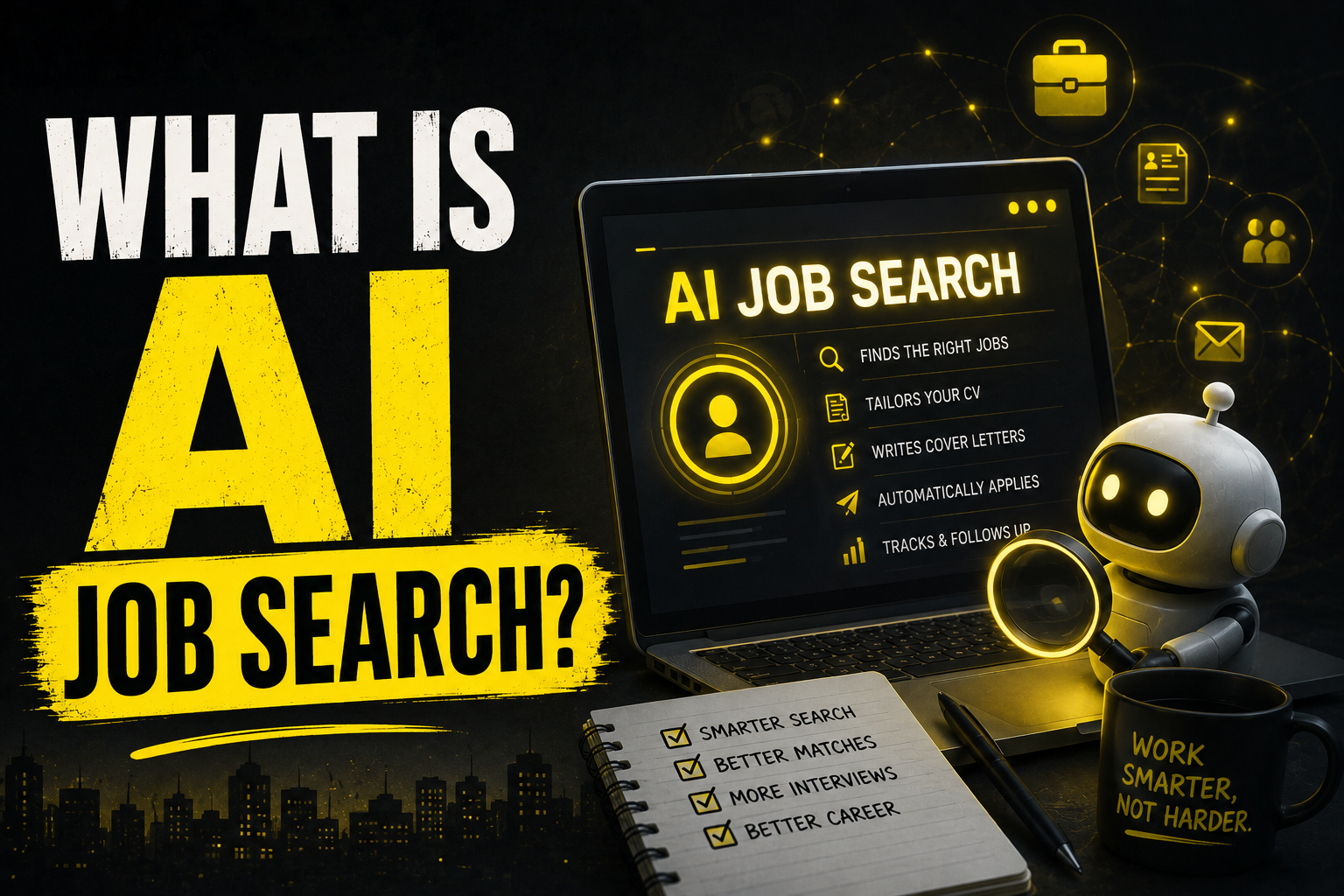
Jump to Section
AI Job Search in India – What It Means, How It Works, and Which Tools Are Built for Indian Job Seekers
So trying AI tools used to be a niche question. Now it is the default assumption among Indian professionals. This guide covers what AI job search India actually means in 2026. It explains how the mechanics work underneath the marketing language, and it covers which tools are genuinely built for Indian portals, rather than retrofitted from a different market.
More than 90% of Indian professionals now plan to use AI in their job search this year. That figure comes from LinkedIn’s own January 2026 India research. It marks a real shift. AI has moved from optional to the default starting point for most job seekers. However, adoption and confidence are not the same thing. The same research found that 84% of professionals still feel unprepared to find a new role. So a real gap exists between people using AI and people using it well.
India also leads the world in a broader sense. ADP Research’s 2026 People at Work report found that 80% of Indian employees use AI multiple times a week at work. That is the highest rate across 36 surveyed markets globally. Additionally, 41% use AI almost daily, again the highest figure worldwide. This context matters. AI job search India tools are not landing in isolation. They are landing in a workforce that already treats AI as routine, not a novelty.
Hiring is shifting too. AI-linked job postings in India are projected to grow 32% year on year in 2026. That is according to foundit’s Insights Tracker, reaching close to 3.8 lakh positions. Consequently, 71% of Indian recruiters now use AI to identify candidates. Most say it changes how they assess skill fit. So both sides of hiring are moving toward AI at the same time. This raises the stakes for job seekers standing still.
What Does AI Job Search India Actually Mean
The phrase covers a wide range of tools. Lumping them together causes real confusion. So at the simplest level, some tools score your resume against a job description and flag what is missing. Naukri’s competitiveness score works this way, and it is genuinely useful as a diagnostic. However, a score alone fixes nothing. You still make the edits, and you still apply manually afterward.
Meanwhile, a second category focuses on networking and visibility. LinkedIn’s Premium Career tier falls here, with its AI writing assistant and applicant insights. These tools help you get noticed by the right people. That networking layer is something automation genuinely cannot replace. Recruiters respond to warm signals, not just algorithmic matches.
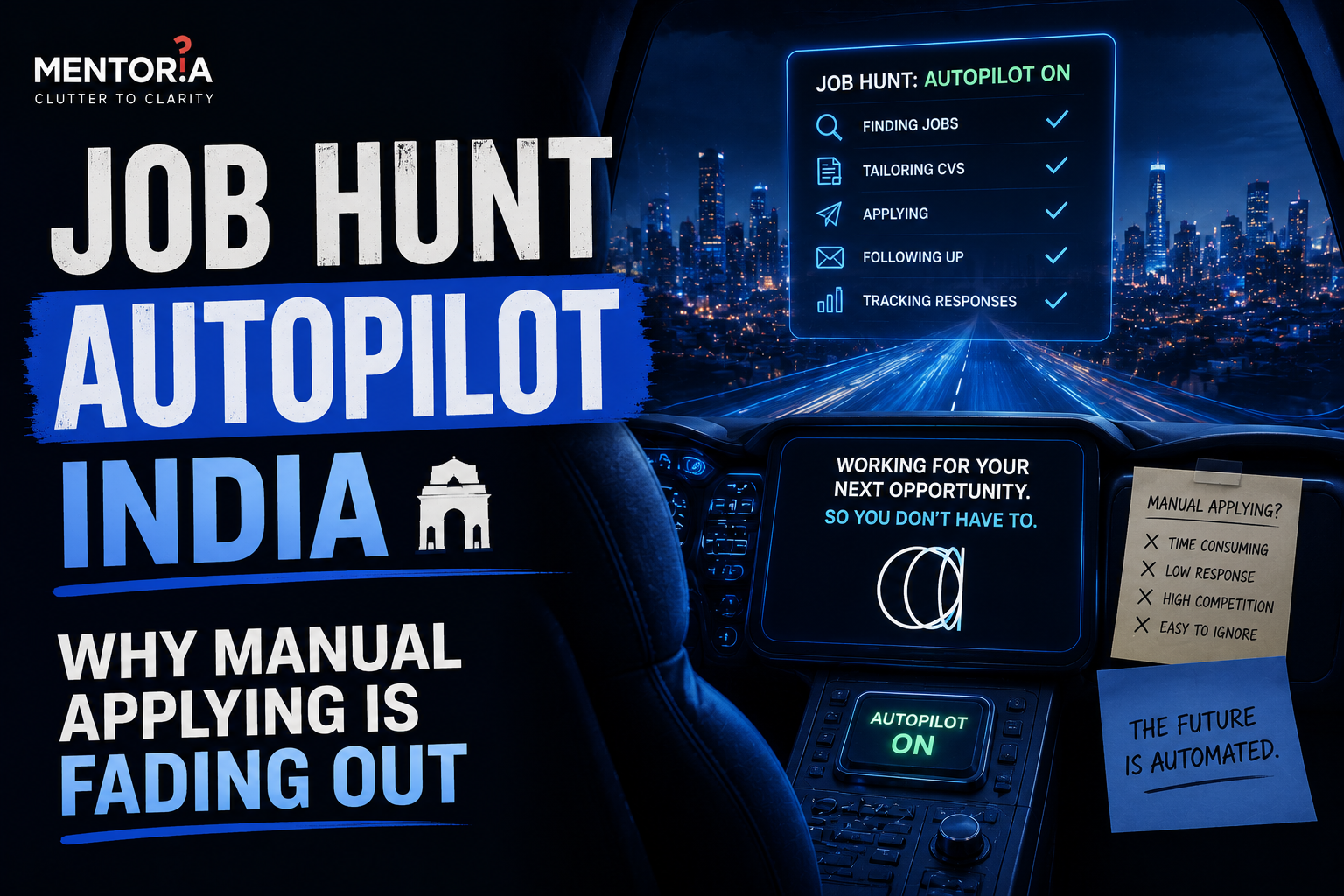
Finally, a third category handles the actual mechanics of applying. Additionally, this is the newest category. It includes scanning job boards continuously, tailoring a resume and cover letter per listing, and finding the right contact. Finally, it includes submitting the application and following up automatically. Tools like Arya, myjobb, and knok sit here. They represent the most complete answer to what AI job search India can deliver, when done properly.
How AI Job Search Tools Actually Work
Understanding the mechanics helps separate genuine automation from surface-level branding. Consequently, a real AI job search India tool runs through four connected stages. First, it scans listings across multiple portals continuously, instead of requiring manual search each day. Second, it matches those listings against your profile using more than keyword overlap. A real match accounts for seniority, industry context, and role fit.
Third, it tailors your application materials for each listing specifically. This means adjusting the resume’s language to mirror the job description. It is not just inserting your name into a template. Fourth, it handles outreach and follow-up. A large share of applications go unanswered simply because no one follows up in time.
However, each stage matters alone, but partial tools leave real gaps. A resume scorer without automatic tailoring still needs manual editing for every application, and a networking tool without automation still leaves every form to fill by hand. Full-loop tools are the ones actually changing outcomes. They are not just adding an AI label to an old process.
Which Tools Are Genuinely Built For Indian Job Seekers
So this distinction matters more than most roundups admit. Many AI job search India tools in global rankings were built primarily around LinkedIn and Indeed. Coverage of Naukri, IIMJobs, Shine, Foundit, Hirist, or Instahyre is often thin or missing. For an Indian job seeker, that gap alone makes a globally popular tool far less useful in practice.
Arya by Mentoria, India’s AI Job Hunter, was built specifically around this gap. Arya’s 7 interconnected AI agents scan 84,000+ jobs monthly. They cover every major Indian job portal, then deliver the 15 most relevant roles daily. As a result, this removes the need to check five separate apps every morning, since scanning runs continuously in the background.
Additionally, Arya tailors a CV and cover letter for each role. Each one reaches a 75%+ ATS match score, closing the exact gap resume scoring tools identify but never fix. Furthermore, Arya finds recruiter email addresses directly. It follows up automatically at set intervals, adding the outreach layer most job seekers skip after one attempt.
This full-loop approach reflects the data above. AI adoption in job search is no longer optional in India. However, the 84% preparedness gap shows casual AI use is not closing that gap alone. Users on Arya report up to 8x more interview calls, since running the complete loop beats handling one piece and leaving the rest manual.
How AI Job Search Tools Differ Across Indian Cities
AI job search India tools do not work identically everywhere. Instead, the job market itself varies by city. So in Bengaluru and Hyderabad, IT and tech roles dominate listings. Portals like Instahyre and Hirist carry meaningful volume alongside Naukri and LinkedIn. Consequently, a tool that skips these portals misses real listings in these cities specifically.
Mumbai and Delhi NCR lean toward finance, consulting, and media roles instead. Naukri and LinkedIn carry more weight here. Meanwhile, Tier 2 cities like Pune, Ahmedabad, and Chandigarh are growing faster than metros in several sectors, per multiple 2026 hiring reports. So a tool with narrow big-city coverage risks missing real opportunity in these growing markets.
This is part of why portal coverage matters more in India than most markets. A tool built around LinkedIn works fine for a US or UK job seeker, since LinkedIn carries most relevant listings there. In India, a meaningful share of hiring still runs through Naukri, IIMJobs, Shine, Foundit, Hirist, and Instahyre. So a tool that ignores these portals works from an incomplete picture, no matter how sophisticated its matching claims to be.
How To Evaluate An AI Job Search Tool Before You Commit
So many tools now claim an AI label. A few practical questions separate genuine automation from surface branding. First, ask which portals the tool actually scans. A tool covering only LinkedIn and Indeed is not built for the Indian market, however advanced its matching sounds.
Second, ask whether tailoring happens automatically per job description. Some tools still expect manual editing for each application. Genuine tailoring adjusts language, keywords, and emphasis to the specific listing. It does not just insert your name into a fixed template.
Third, check whether the tool handles outreach and follow-up, or stops once the application goes out. Instead, a meaningful share of hiring happens because someone followed up at the right moment. It is not always because the first application was perfect. A tool that submits and goes silent only solves part of the problem.
Fourth, look at how much manual oversight the process needs day to day. Some tools require constant micromanagement, checking matches, approving each application, correcting mismatches. This defeats much of the time-saving purpose. Consequently, strong AI job search India tools run with minimal daily oversight once preferences are set, so your time goes toward interview prep instead.
Finally, compare actual cost against what each tool replaces. A resume scorer alone looks inexpensive. However, if it still needs hours of manual tailoring and applying, the real cost includes your time, not just the subscription price. A full-loop tool may cost more upfront, but it often works out cheaper once your time is factored in.
Why The Adoption Gap And The Preparedness Gap Coexist
The numbers above raise a real question. If more than 90% plan to use AI, why do 84% still feel unprepared? The answer sits in what using AI actually means for most people right now.
For many job seekers, using AI means running a resume through a free checker once. Or asking a chatbot to rewrite a cover letter occasionally. However, these are useful actions, but they touch only a small part of the process. The scanning still happens manually, and the application still gets submitted by hand. Meanwhile, the follow-up, if it happens at all, still depends on the job seeker remembering to send it.
So this is the real gap between casual AI use and full-loop automation. A job seeker polishing one resume with AI is technically part of the 90% adoption figure. However, their actual search still runs the same way it did five years ago, just with slightly better documents. Consequently, the preparedness gap persists because these tools were never built to close it entirely.
Full-loop AI job search India tools remove the manual steps partial tools leave in place. When scanning, tailoring, applying, and following up happen automatically and continuously, the daily burden stops being a daily burden. The gap does not close because job seekers try harder. It closes because the process itself changes.
What Actually Changes When You Automate The Full Search
So job seekers moving from partial AI use to full automation notice three changes early. The first is time. Consequently, hours spent searching, copying, and tailoring resumes return to the job seeker. That time compounds into real preparation for interviews and skill-building instead.
The second change is consistency. Instead, a manual job search naturally slows after the first week or two, as motivation fades with repetition. An automated system does not experience that decline. So application volume and quality stay consistent throughout the search, instead of tapering off when persistence matters most.
Finally, the third change is response rate. Tailored applications sent consistently, with timely automated follow-up, generate more interview calls than generic applications sent in bursts. This is exactly why users on Arya report up to 8x more interview calls. Tailoring, consistency, and follow-up compound together, rather than acting as separate, isolated improvements.
What This Means For Your Job Search In 2026
So the practical takeaway is straightforward. Using some AI is no longer a competitive edge, since 90% of your competition plans the same. The real edge comes from AI that runs the complete process, not just one stage.
Instead, start by identifying where your search leaks the most time. If you spend hours searching portals manually, a scanning and matching tool addresses that first. Meanwhile, if your resume gets no responses despite matching the role, tailoring to a real ATS score matters more. Finally, if you apply and hear nothing back, automated follow-up closes that gap.
Arya by Mentoria was built to address all three at once. So job seekers stop stitching together three subscriptions to cover what one system should do natively. Start free at arya.mentoria.com and see what AI job search India looks like when the entire loop runs automatically, instead of in pieces.