
Climate Careers in India: Who’s Hiring, What They Pay, and How to Get In

Malaika M Khan
Last Updated: May 19, 2026
Your LinkedIn feed has a new kind of brag.
Not the promotion post. Not the MBA admit. It’s the person who just left a comfortable job to work in climate. And somehow, they look more alive than anyone else you follow.
You’ve probably wondered, is there actually money in this? Or is it just passion with a pay cut?
Here’s the honest answer: it’s both real and growing. Faster than most people realise.
This Isn’t a Niche Anymore
India has committed to producing 500 GW of clean energy by 2030. That’s an enormous target and it needs an enormous number of people to make it happen. The ILO (International Labour Organisation) estimates India could add 8 million green jobs by 2030. The sector already employs over 35 million people today (Towards Sustainability, 2026).
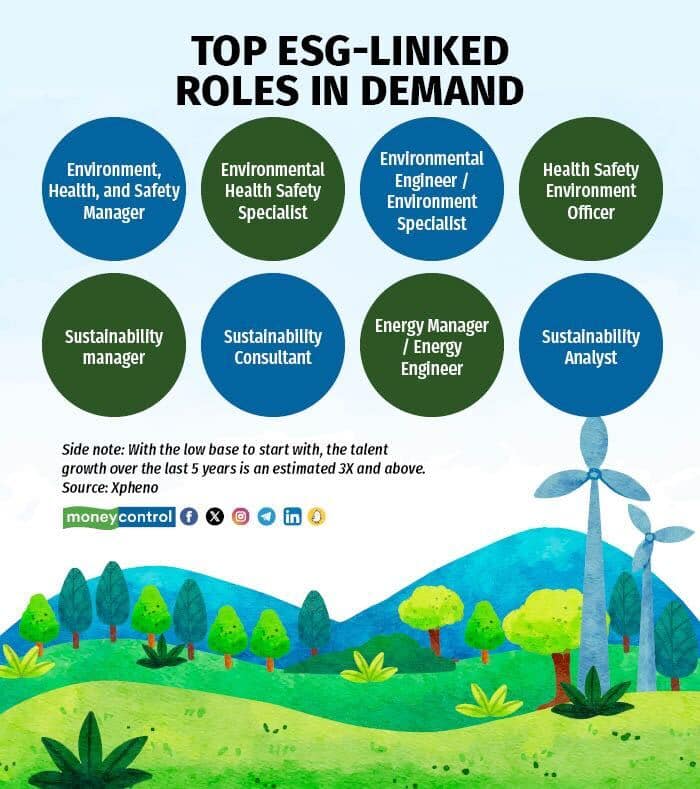
And it’s not just solar panel installation. Companies in India are now legally required to report how they’re impacting the environment thanks to SEBI’s BRSR rules. The top 250 listed companies have to do this from 2025-26 onwards. That means every big company needs people who understand sustainability. Not someday. Now.
So Who’s Actually Hiring?
More people than you’d think. And not just NGOs.
Big Indian companies are the biggest hirers right now. Tata, Mahindra, Reliance, Adani, JSW, and ReNew Power have all built large climate businesses and are actively hiring- engineers, project managers, data analysts, and policy people (Dheya, 2026).
Consulting firms like EY, PwC, Deloitte, and Bain all have sustainability teams in India. They advise companies on how to reduce emissions, write ESG reports, and manage climate risk. These firms hire fresh graduates too.
Renewable energy companies- Tata Power Solar, Adani Green, ReNew, need engineers, project planners, and operations people. Solar, wind, and battery storage are all growing fast.
Banks and financial firms are a surprise entry. Climate is now a financial risk, extreme weather affects businesses, which affects loans, which affects banks. So banks are hiring people who can assess that risk. Financial services was the fastest-growing sector for green hiring in 2024-25, growing 16.3% year-on-year (Taggd, 2026).
What Do These Jobs Actually Pay?
Let’s be honest about the numbers.
Starting out, field or monitoring roles pay around ₹3–5 LPA. Not spectacular, but comparable to other entry-level science jobs.
Mid-level ESG and sustainability roles at companies or consultancies pay ₹8–18 LPA. Climate risk analysts in banks or consulting firms earn ₹12–22 LPA. Sustainability managers average ₹12.5 LPA, going up to ₹35 LPA with experience (Zell Education). Senior roles at large companies can reach ₹40–70 LPA (Frontlines Media, 2026).
One important thing: companies that wait too long to hire climate talent are already finding it hard. Qualified people are scarce, and salaries are rising. Green professionals in India already command up to 40% higher salaries than comparable roles in other sectors (Taggd, 2026).

The Honest Problem With Getting In
Most career guides won’t tell you this part. The hiring system for climate jobs in India is messy.
Job descriptions are confusing. Some ask for ten years of experience in a field that’s barely ten years old. As Piyasi Mitra, who works in Cipla’s sustainability team, told AshokaX (2025): “They don’t count prior experience in adjacent roles, so you’re basically starting from zero.”
The way around this? Certifications. Specific ones that employers actually recognise:
- CFA Institute’s ESG Certificate
- GRI Certified Sustainability Professional
- GARP’s Sustainability and Climate Risk (SCR) certification
You don’t need to completely change your background. An engineer, a finance student, a law graduate all have skills that transfer directly to climate roles. The trick is pairing what you already know with one of these certifications to signal that you understand the climate piece too.
The Window Is Open Right Now
India’s climate workforce is still being built. The roles are real, the money is real, and the people getting in early are writing the job descriptions that everyone else will apply to in five years.
If you’re curious about which part of this space actually fits your background and what a real path in looks like that’s exactly the kind of question a counsellor can help you answer.
Talk to a Mentoria counsellor and figure out your climate career path.
Sources: ILO India Employment Report 2024 | IRENA 2024 | Taggd Green Jobs & Sustainability Hiring Report 2026 | Zell Education ESG Salary Guide | Frontlines Media Environmental Jobs Salary India 2026 | AshokaX — The Promise and Puzzle of Green Jobs in India (2025) | Dheya Climate Tech Careers India 2026 | Towards Sustainability — Green Jobs in India 2026