You Don’t Hate Your Job. You Hate Feeling Invisible at Work

Malaika M Khan
Last Updated: May 22, 2026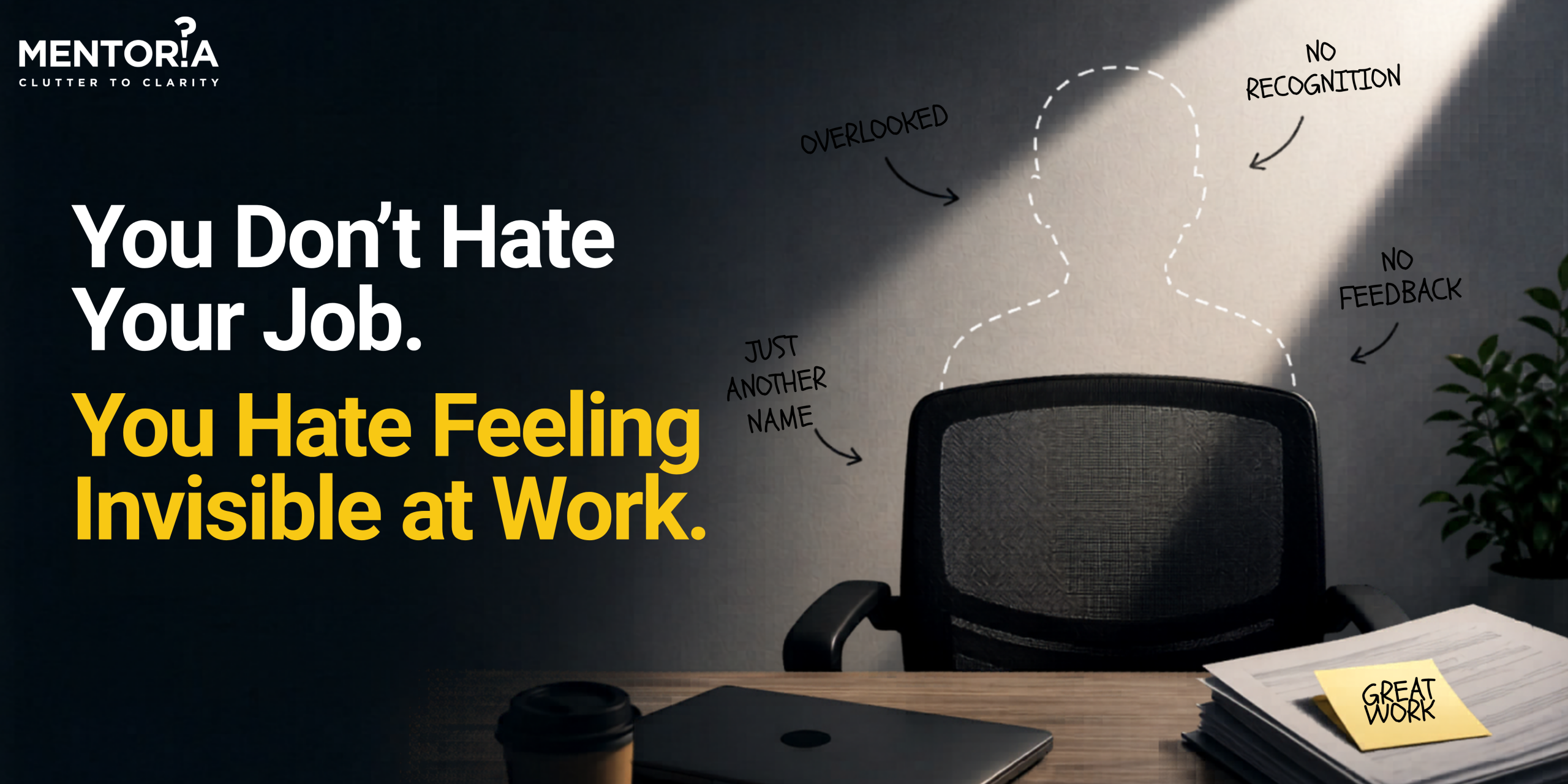
You’ve been wondering why you still feel exhausted after all that Sunday sleep.
You wake up tired. You check your mail tired. And somewhere between your manager’s third “just following up” and your 50 pending drafts, you just start to think:
Man, I hate this job.
But what if you don’t?
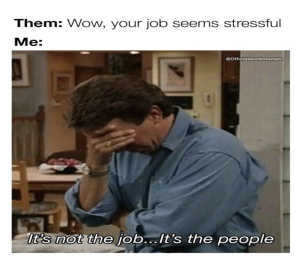
What if the real problem is that you’ve started feeling invisible at work? And the lack of validation makes you ask yourself: “Do I really matter here?”

The Psychology of Feeling Invisible at Work
Let’s face it, most workplaces today have a visibility problem.
A few years ago, a decent salary, a respectable working space and Saturdays off if you’re lucky was considered golden. But today you’re competing with friends suddenly earning in dollars and people announcing career wins every single week.
And the numbers are uncomfortable. According to MetLife’s 2025 research, only 53% of employees feel valued at work — a 10% drop from the previous year. So when your work goes unnoticed for too long, your brain stops reading it as “my manager is busy.” Instead it reads it as “maybe I don’t matter here.”
And that’s a much deeper wound.
You might feel socially neglected and start to overperform. Every task met before deadline, every mail replied to within minutes. And then eventually, unfortunately, the fatigue catches up.
The scariest part? You feel emotionally detached. And before you notice it, you’ve found your way back to the same question: “Do I really matter here?”
This Is Why Feeling Ignored at Work Makes You Want to Quit
Sometimes the urge to resign has less to do with the actual job and more to do with emotional starvation.
Being ignored can make months of good salary feel completely empty. Whereas a simple compliment on a presentation can instantly brighten your entire day. Research consistently shows that 79% of employees who quit cite lack of appreciation as a key reason for leaving (Doug Thorpe, 2026). People aren’t leaving because the work is too hard. They’re leaving because they feel invisible.
You start quitting mentally before actually thinking of a resignation. And that’s not because you want a different Excel sheet.
You want appreciation, acknowledgement, influence, growth, to feel seen. Not just another appraisal.

Output-Based Work Culture Is Slowly Draining People
Modern workplaces love one thing: your numbers and how you hit them. Whoever tops the charts is automatically the most satisfied, right?
Well, not really.
Sure, the numbers give you a boost from time to time. But you also want meaningful work. And as Dr. Munia Bhattacharya, Senior Consultant in Clinical Psychology at Marengo Asia Hospitals, Gurugram, told Business Standard (June 2025): consistently feeling undervalued can slowly erode your self-esteem, reduce motivation, and lead to anxiety and burnout over time.
Sometimes meaningful work is simply being respected, feeling intellectually challenged, having autonomy, being recognised, and working with people who actually value what you bring.
A lot of people assume meaningful work has to be passion-driven or world-changing. But honestly, even ordinary jobs can feel deeply meaningful when a person feels heard, trusted and connected. On the other hand, even dream jobs can start feeling empty when they become emotionally draining and disconnected from personal values.
The Power of Small Recognitions
Sometimes a “thank you, great work” from that one manager is all you need to keep going.
Not a promotion. Not a motivational speech. Not a fancy award.
That’s why small appreciation matters so much. People survive on very little emotional reassurance, especially in work cultures where criticism is common but appreciation is rare.
A simple “Good job.” “I noticed your effort.” can stay in someone’s mind for months. Because recognition creates energy. It reminds people that their existence is impacting others positively. And sometimes, that tiny moment becomes the reason they don’t quit, don’t break down, or don’t stop believing in themselves completely.
So What Do You Do With This?
If you’ve read this far, you probably recognise yourself somewhere in it.
Feeling invisible at work is real. And it’s also one of the clearest signs that something in your career needs a closer look.
Maybe you’re not ready to quit. Maybe you’re not even sure you want to. But somewhere in the back of your head, you’re wondering what else is out there.
Here’s the thing: you don’t have to make a big, scary decision right now. You don’t have to update your resume this weekend or tell your manager anything. You can just know your options.
That’s exactly what Arya by Mentoria, India’s AI Job Hunter, was built for. While you’re figuring out whether to stay or go, Arya quietly runs your job hunt in the background. It scans 84,000+ jobs monthly, finds the 15 most relevant roles for you daily, tailors your CV for each one, and applies on your behalf — without you having to show up for any of it until there’s an interview worth showing up for.
You keep living your life. Arya keeps your options open.
Because sometimes, just knowing something better exists is enough to stop feeling so stuck.
25,000+ job seekers across India have already switched. Start free with Arya.